
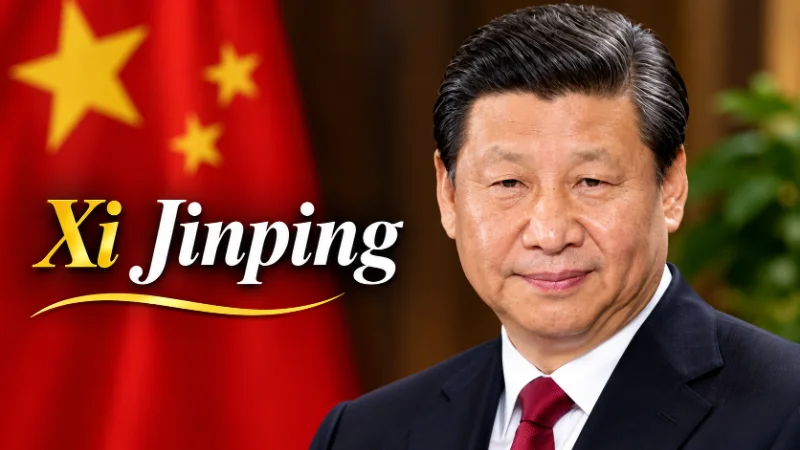
Xi Jinping is China’s president and General Secretary of the Chinese Communist Party. His position at the center of China’s political system has made his personal finances a subject of international interest. However, Xi Jinping net worth is difficult to establish because no independently verified public financial statement reveals his complete personal assets and liabilities.
Online estimates vary considerably. Celebrity Net Worth lists his fortune at $1 million, while other websites publish much higher figures based on investigations into his extended family’s business interests. Those figures are not interchangeable. In 2012, Bloomberg identified hundreds of millions of dollars in company assets connected to relatives, but its investigation did not trace assets directly to Xi, his wife, or their daughter.
Understanding his financial background requires looking beyond a single number. His government salary, family connections, historical business investigations, and the limits of available financial records all help explain why his actual personal fortune remains uncertain.
What Is Xi Jinping’s Net Worth in 2026?
There is no independently verified figure for Xi Jinping’s personal net worth in 2026. Celebrity Net Worth publishes an estimate of $1 million, but this should be treated as a third-party estimate, not an official declaration or an audited calculation.
Some online publications suggest that his wealth reaches hundreds of millions or even billions of dollars. These claims often draw on historical investigations into the investments and property holdings of his relatives.
The distinction matters because company assets are not the same as personal wealth. A business can own valuable property and investments while also carrying debts and other financial obligations. Its total assets cannot simply be added to an individual’s net worth.
For readers looking for a reliable answer, the most accurate description is that his personal fortune remains publicly unverified.
Why Are Estimates of His Wealth So Different?
Different websites use different methods to estimate the wealth of political figures. In Xi’s case, the problem becomes more complicated because public information about the personal finances of China’s highest political leaders is limited.
Some websites publish a single estimated amount without explaining how it was calculated. Others use information about extended family members, company investments, and property records.
There are three separate financial categories readers should understand:
- Personal wealth: Assets legally or beneficially owned by Xi himself, minus his liabilities.
- Family wealth: Investments and property associated with relatives, which may have separate owners.
- Political resources: Government facilities and resources connected to his official position, which are not automatically personal property.
Combining these categories creates misleading estimates. A reliable article must keep them separate.
What Bloomberg Discovered About His Family’s Wealth
One of the most widely discussed investigations into Xi Jinping’s family finances was published by Bloomberg on June 29, 2012.
The investigation examined corporate documents and identified business interests connected to members of his extended family, including his older sister Qi Qiaoqiao, brother-in-law Deng Jiagui, and niece Zhang Yannan.
Bloomberg reported investments in companies with total assets of approximately $376 million. It also identified an indirect 18% stake in a rare-earth company with $1.73 billion in assets and a $20.2 million holding in a publicly traded technology company.
These figures attracted international attention, but they need to be understood in their original context.
The $376 million figure represented company assets, not a verified family net worth. Bloomberg also stated that the figures did not account for liabilities. Its investigation did not trace assets directly to Xi Jinping, Peng Liyuan, or their daughter.
This is one of the most important distinctions when researching the subject. The investigation documented business interests associated with relatives, not a confirmed personal fortune belonging to China’s president.
What Happened to the Family’s Business Investments?
A later investigation published by The New York Times on June 18, 2014, examined changes in the business interests of Xi’s relatives.
The newspaper reported that his sister and brother-in-law had sold, liquidated, or transferred investments in at least 10 companies between 2012 and 2014. These businesses were mainly connected to mining and real estate.
The investigation also found that some relatives continued to hold shares and property interests worth tens of millions of dollars.
These developments provided a later picture of the family’s financial activities. They did not establish that Xi personally owned the investments or received the proceeds.
The historical record is useful because it shows why estimates based on family wealth can differ from estimates based on an individual’s documented personal assets.
What Does the 2025 US Intelligence Report Say?
A more recent source is the Office of the Director of National Intelligence (ODNI), which published a report titled Wealth and Corrupt Activities of the Leadership of the Chinese Communist Party on March 20, 2025.
The report discusses the financial interests of senior Chinese political families and the difficulty of researching their wealth.
According to the report, Xi’s siblings, nieces, and nephews held assets worth more than $1 billion in business investments and real estate, based on earlier journalistic investigations.
It also notes that available industry research indicated that Xi’s family retained millions of dollars in business interests and financial investments as of 2024.
However, the report distinguishes family holdings from investments specifically linked to the leaders themselves. It also discusses how limited public financial disclosures and information controls make independent research difficult.
This report provides a more recent official US government assessment of the subject. It does not establish a verified personal net worth for Xi Jinping.
Xi Jinping’s Salary and Official Income
Xi Jinping’s government salary is another part of the discussion, although it should not be confused with his total personal wealth.
In January 2015, The Irish Times reported that his monthly salary increased from 7,020 yuan to 11,385 yuan following a salary adjustment for senior Chinese officials.
That was a reported monthly basic salary at the time. The newspaper also explained that the basic salary was only one component of Chinese civil servants’ compensation, with allowances associated with duties and positions.
This historical figure should not be presented as his confirmed 2026 salary. A current official salary statement establishing his exact annual compensation was not identified.
His compensation from public office also provides no direct answer about any private investments, property, or other personal assets.
Xi Jinping’s Early Life and Political Background
Xi Jinping was born in June 1953 in Fuping County, Shaanxi Province, China. His father, Xi Zhongxun, was a senior Communist Party figure who held important government positions.
His early life was shaped by the political circumstances of his family and the period in which he grew up.
At the age of 15, he went to Liangjiahe village in Shaanxi during the Cultural Revolution. He spent several years there before returning to formal education.
In 1975, he began studying chemical engineering at Tsinghua University. He later completed an in-service graduate program in Marxist theory and ideological and political education.
His official biography records that he joined the Communist Party in January 1974 and began his first job in January 1969.
His political career developed through several local and provincial positions before he moved into China’s central leadership.
How Xi Jinping Built His Political Career
His rise to China’s top leadership took place over several decades. Rather than coming from a conventional business background, his career developed through government and Communist Party positions.
1: Early Government Positions
After studying at Tsinghua University, Xi worked in government offices before taking provincial and local leadership positions.
He served in Hebei Province and later held positions in Fujian and Zhejiang. These assignments gave him experience in local administration and regional economic development.
2: Entry Into China’s Central Leadership
In 2007, Xi became a member of the Politburo Standing Committee, China’s highest-level party leadership body.
He became vice president of China in 2008. In November 2012, he became General Secretary of the Communist Party of China and chairman of its Central Military Commission.
3: Becoming China’s President
On March 14, 2013, Xi was elected president of the People’s Republic of China.
He was elected to a third presidential term on March 10, 2023. His positions include General Secretary of the Communist Party and chairman of the Central Military Commission.
These roles explain why his political influence attracts worldwide attention, but political authority should not be treated as evidence of personal financial ownership.
Who Is Peng Liyuan?
Peng Liyuan is Xi Jinping’s wife and a well-known Chinese singer. She established her career as a performing artist before becoming internationally recognized through her public appearances as China’s first lady.
She has also worked on public health initiatives. The World Health Organization appointed her as a goodwill ambassador for tuberculosis and HIV/AIDS.
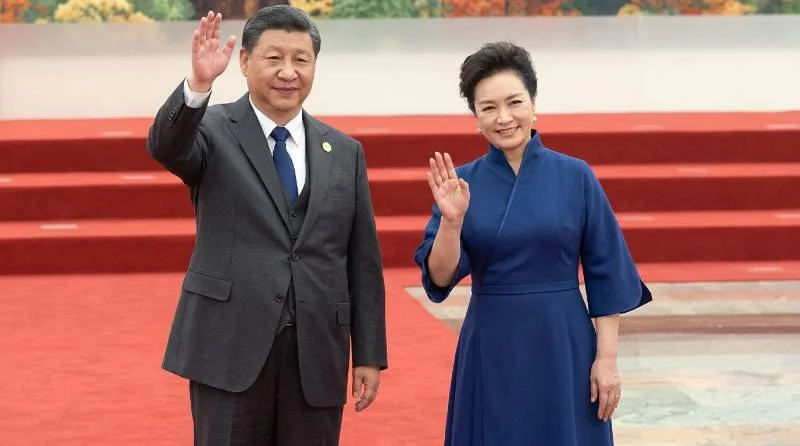
In 2026, she continued to participate in public health and international cultural activities.
Her professional career is separate from her husband’s government salary and political responsibilities. There is no independently verified public financial statement establishing the couple’s combined net worth.
Why Is It Difficult to Verify the Personal Wealth of China’s Leaders?
The lack of comprehensive public financial disclosures is one of the main obstacles to estimating the wealth of China’s senior political figures.
The March 2025 ODNI report specifically discusses how limited disclosure requirements and information controls make it difficult to establish personal financial holdings.
There are also practical problems with tracing ownership through companies and family relationships. Corporate investments may involve several shareholders, holding companies, and different legal entities.
Even when journalists identify a property or business interest, they must establish who owns it, who controls it, and whether the individual has a financial interest in it.
This is why historical investigations are useful but cannot automatically provide an exact current net-worth figure.
The distinction between direct ownership and relatives’ business interests is especially important in Xi Jinping’s case.
What Is Actually Known About Xi Jinping’s Financial Position?
The available evidence provides several separate pieces of information.
His official political biography and career are publicly documented. Historical reporting also provides information about his salary and the business activities of some members of his extended family.
Bloomberg’s 2012 investigation documented company assets connected to relatives, while The New York Times examined subsequent investment sales and transfers in 2014.
The ODNI’s March 2025 assessment provides more recent information about family-related business interests through 2024.
However, none of these sources provides a complete, independently verified statement of Xi’s personal assets and liabilities.
For that reason, the $1 million figure published by Celebrity Net Worth should remain clearly labeled as a third-party estimate. Much larger claims should also be treated cautiously unless supported by evidence of direct personal ownership.
The distinction between his political position, official compensation, and extended family’s financial interests is what makes this subject difficult to measure accurately.