
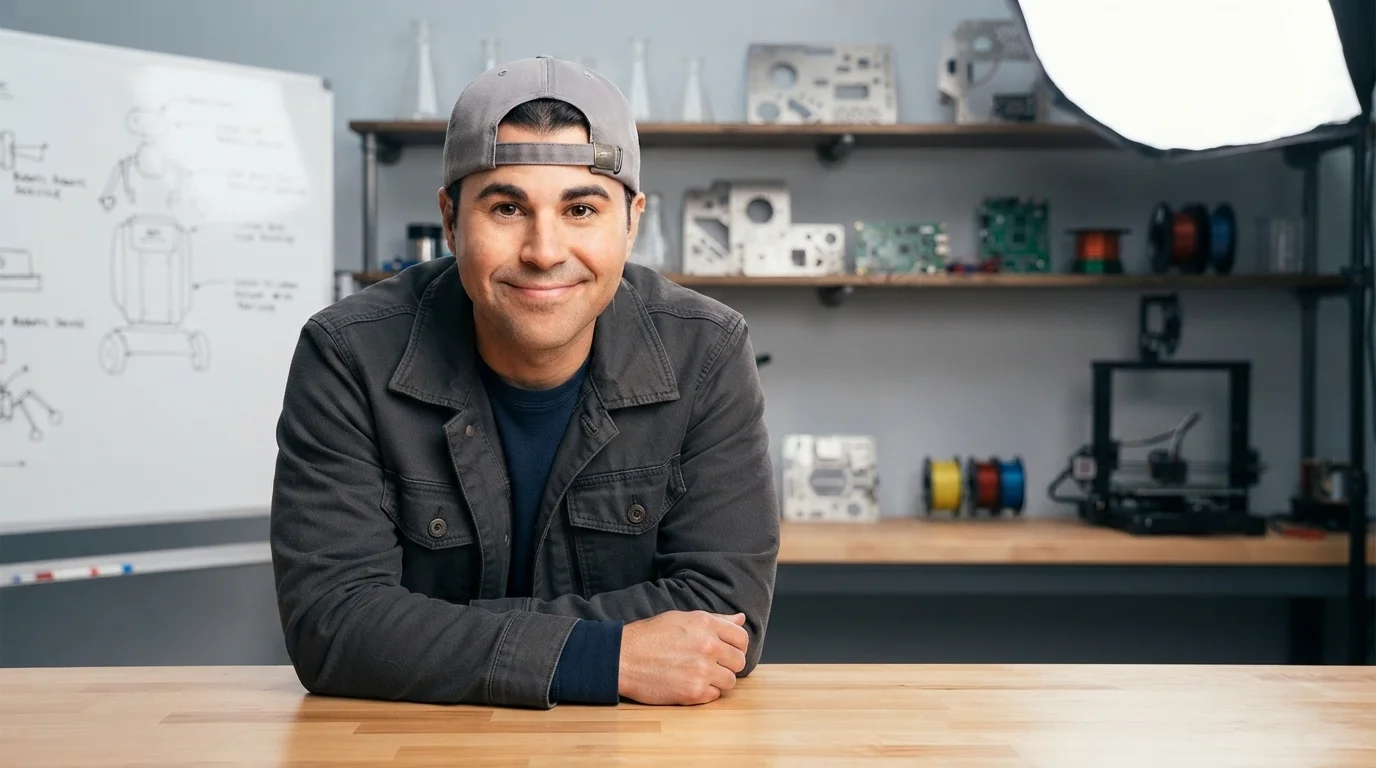
Mark Rober has a net worth estimated at around 50 million dollars as of 2026, built through YouTube, his CrunchLabs subscription box company, brand partnerships, and nearly a decade of engineering work at NASA and Apple before he ever picked up a camera. He turned 46 this year, having been born on March 11, 1980, in Orange County, California.
Who Is Mark Rober
Rober is an American engineer, inventor, and YouTuber known for turning real engineering problems into viral science content. He spent nine years at NASA’s Jet Propulsion Laboratory, where he worked on the Mars Curiosity Rover, before moving into product design work in Apple’s Special Projects Group for four years.
He left the corporate engineering world behind to build a YouTube channel that now has more than 58 million subscribers, focused on elaborate science experiments, squirrel obstacle courses, and glitter bomb packages built to catch porch pirates.
Early Life and Education
Rober grew up in a family of five in Orange County and has said his mother, who died of ALS earlier in his career, was a major influence on his curiosity about how things work. He studied mechanical engineering at Brigham Young University, where he also met the woman who would later become his wife.
That engineering background is the reason his videos read differently from typical entertainment content. Every build, from a giant Super Soaker to a squirrel-proof bird feeder, is grounded in real physics and real prototyping, not just a stunt for the camera.
NASA and Apple Career
Rober joined NASA’s JPL in 2004 and spent nine years there, seven of which were tied directly to the Mars Curiosity Rover mission that landed in 2012. During that stretch, he also started experimenting with viral video ideas on the side, including a Halloween costume that turned him into an internet name years before he quit his day job.
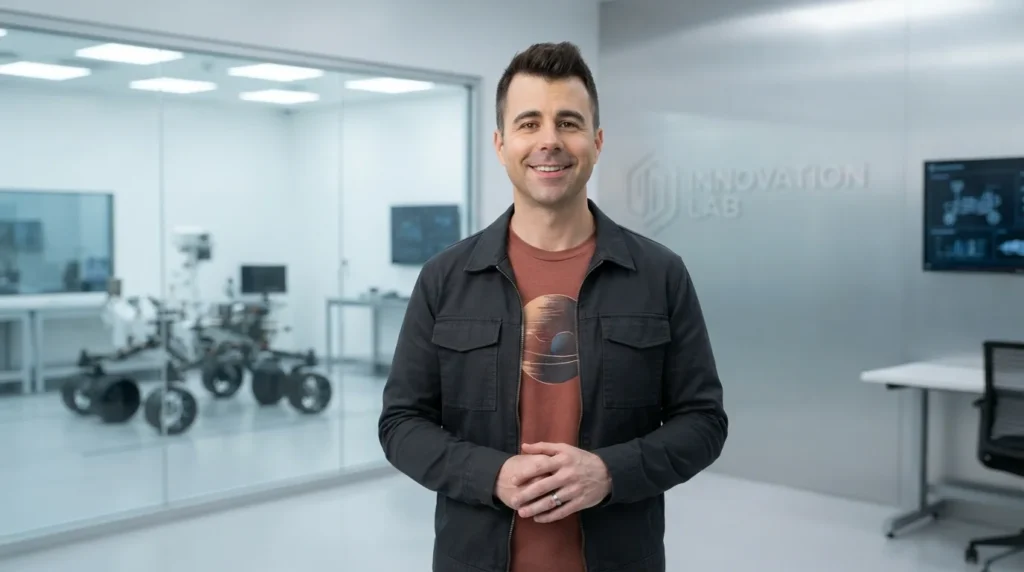
After NASA, he spent about four years at Apple as a product designer working on early-stage hardware projects that were never publicly disclosed in detail. He left Apple in 2015 to focus on YouTube full-time, a decision that looked risky at the time but became the foundation of everything that followed.
YouTube Channel and Rise to Fame
Rober’s channel took off with videos that combined high production values with genuine scientific curiosity, including the world’s largest Nerf gun, a squirrel maze built like an obstacle course from a heist movie, and repeated glitter-bomb devices designed to punish package thieves. Those glitter bomb videos alone have been viewed hundreds of millions of times and turned him into one of the most recognizable names in science content on the internet.
His channel now pulls in tens of millions of views per video regularly, and he has collaborated with other major creators, including MrBeast, which expanded his reach even further. YouTube ad revenue is only one piece of his income, but with a channel of that size, it remains a significant and steady contributor.
CrunchLabs and Business Ventures
CrunchLabs is Rober’s monthly STEM subscription box for kids, where subscribers build hands-on engineering projects designed to teach real mechanical and electrical concepts. According to comments from people close to the business, CrunchLabs now generates more revenue than his YouTube channel does, with reported monthly earnings in the range of several million dollars.
A CrunchLabs series has also streamed on Netflix, repackaging some of his most popular science experiments for a wider audience beyond YouTube. Between the subscription box, licensing deals, merchandise, and brand sponsorships, CrunchLabs has become the largest single piece of his overall financial picture.
Mark Rober Net Worth Breakdown
Estimates of Rober’s net worth vary fairly widely depending on the source, ranging from around 20 million dollars on the more conservative end up to 65 million dollars on the higher end. Celebrity Net Worth, one of the more commonly cited sources for this kind of figure, currently lists his net worth at 50 million dollars.
That spread exists because most of his income comes from privately held sources, CrunchLabs revenue, sponsorship rates, and merchandise sales, none of which are publicly disclosed the way a public company’s earnings would be. What is consistent across nearly every estimate is that his wealth has grown steadily since he left Apple in 2015, driven by diversified income rather than a single viral moment.
His primary income sources break down into four main areas: YouTube advertising and sponsorship revenue, CrunchLabs subscription and product sales, brand partnership deals tied to his videos, and licensing or streaming revenue from projects like his Netflix series.
Philanthropy: Team Trees and Team Seas
Rober co-created Team Trees in 2019 alongside other YouTubers, an initiative to plant 20 million trees that ended up raising more than 20 million dollars from creators and viewers around the world. He followed it up with Team Seas, a campaign aimed at removing 30 million pounds of trash from oceans and waterways, which pulled in similar levels of support from the creator community.
Both campaigns are widely regarded as some of the largest crowdfunded environmental efforts ever organized through YouTube, and they helped cement Rober’s reputation as someone using his platform for more than entertainment.
Personal Life
Rober married Lisa Earl in 2015, and the couple has a son together who is on the autism spectrum. Rober went public about his son’s diagnosis in a video explaining that he wanted to raise awareness and had been hesitant given how protective he is of his family’s privacy.

He co-hosted a livestream fundraiser with Jimmy Kimmel called Colour the Spectrum Live, which raised 3 million dollars for NEXT for Autism, an organization supporting individuals with autism as they transition into adulthood. In September 2024, Rober shared that he and Lisa had actually been divorced for three and a half years, a detail he had kept private from his audience during that entire period.
What Sets Him Apart
What separates Rober from most large YouTube channels is that his content is built entirely around teaching real engineering and physics concepts rather than chasing trends. His background at NASA and Apple gives him credibility that is difficult to fake, and it shows in how his videos are structured around actual prototyping and problem-solving.
That consistency, rather than any single viral hit, is what analysts and industry commentators point to when explaining why his net worth has continued climbing year over year instead of spiking and fading the way many creator careers do.