
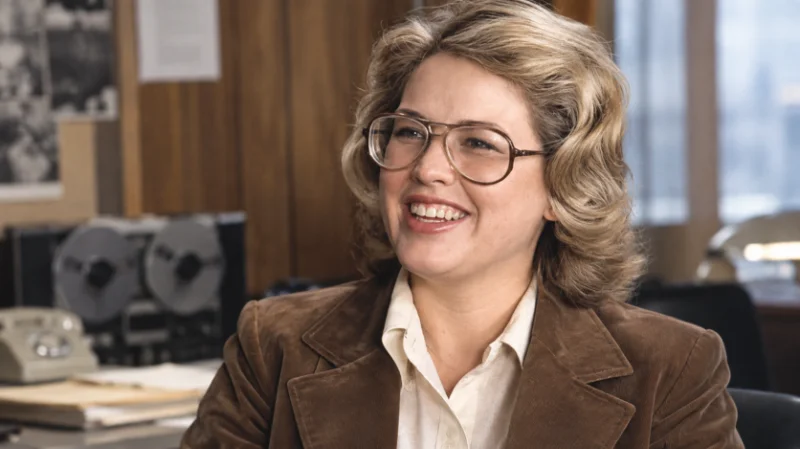
Megan Marshack (1953 to 2024) was a journalist and broadcast producer who worked for Nelson Rockefeller and was with him when he died of a heart attack on January 26, 1979. That night made her a national mystery figure at 25, yet it covers only a small part of a career that ran through radio, network news and a courthouse beat in a small town. She died on October 2, 2024, at age 70, after writing her own obituary.
This guide follows the full arc, from her Los Angeles childhood to her last months in Sacramento. It separates what is confirmed about Rockefeller’s death from what accounts still disagree on, and it covers her marriage, her second act in journalism and the final words she chose herself.
| Category | Details |
|---|---|
| Full Name | Megan Ruth Marshack |
| Born | October 31, 1953, Los Angeles, California |
| Died | October 2, 2024, Sacramento, California, at age 70 |
| Cause of Death | Liver and kidney failure |
| Education | California State University, Northridge, class of 1975 |
| Known For | Aide to Nelson Rockefeller, CBS News producer, and courts reporter |
| Spouse | Edmond Madison Jacoby Jr., married in 2003; died in 2023 |
| Survived By | Her younger brother, Jon Marshack |
Early Life and Education
Marshack was born in Los Angeles on October 31, 1953, and was adopted by Sidney Robert and Credwyn Patricia Marshack. At California State University, Northridge, she majored in Ancient Near Eastern history and modern European history, with minors in cultural geography and journalism, according to her obituary.
She wrote for every school newspaper she attended and joined Sigma Delta Chi, the national journalism fraternity. She graduated in 1975. Her obituary calls covering presidential politics her first love, and she began before she had a diploma.
From Radio Reporter to Rockefeller’s Press Office
Marshack started in radio. She freelanced for Pacifica Radio during coverage of the Patty Hearst kidnapping, then worked as an on-air reporter and newswriter at KGIL and KFWB in Los Angeles. After that she joined Associated Press Radio, first in Los Angeles and later in Washington, D.C.
Her obituary places her in the Western White House press room when Nixon’s Watergate attorney James St. Clair announced the recordings that led to Nixon’s resignation. It also says she covered Gerald Ford’s West Coast trips, including the 1975 assassination attempts in Sacramento and San Francisco. She named Helen Thomas and Peter Lisagor among her mentors.
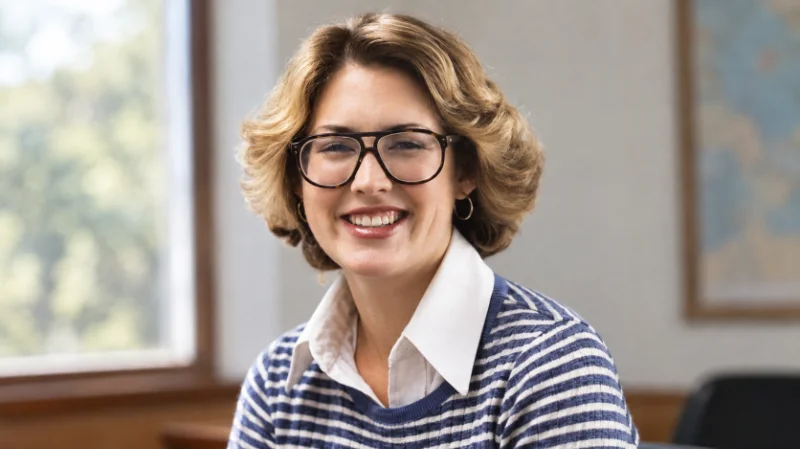
The assignment that changed her path came in 1975. Sent to a Rockefeller news conference in Los Angeles to get a comment on New York City’s financial bailout, she found the vice president answering questions in Spanish. She cut in with a Spanish demand for his attention, switched to English to ask about the city, and the room laughed. Rockefeller took it graciously, and they walked out together.
When Ford passed over Rockefeller for the 1976 ticket, she got a farewell radio interview with him. Weeks later, he offered her a job, according to the obituary. Sources differ on her start date: her obituary describes her as assistant press secretary in 1976, while the Modesto Bee and Wikipedia place her on his staff in 1975.
After Rockefeller left office in 1977 and returned to private life in New York, she stayed on as deputy press secretary. She also directed his art collection, coordinated a related book series and reproductions, and helped with international projects.
January 26, 1979: What Is Known and What Differs
What Sources Agree On
Rockefeller, 70, was a four-time New York governor and former vice president under Ford. He collapsed of a heart attack on the night of January 26, 1979, in Manhattan. Marshack, then 25, was with him, and he was married. The Associated Press notes that shifting explanations of that night fed public speculation.
Where Accounts Differ
The first announcements said Rockefeller died in his offices at Rockefeller Center. A family spokesperson later said he had been working on an art book at private offices elsewhere in Manhattan, according to the AP. The Washington Post’s obituary of Marshack opens with a 911 call giving the address of a townhouse on West 54th Street, and Wikipedia adds that some reports placed his death at her apartment.
The emergency call also drew scrutiny. The New York Times reported in February 1979 that the attack came at about 10:15 that night, roughly an hour before the 911 call, and that the aide had not made the call herself. Other summaries say she waited nearly an hour to phone for help, so who called and when remains contested.
What no source confirms is the nature of their relationship. The press widely alleged an affair, but Marshack never publicly described it, so it stays unconfirmed.
Silence, Fame and Fallout
Marshack became what the AP called a “mystery woman,” hounded by reporters. A Sacramento Bee reporter found her at her brother’s apartment in Davis in the weeks after Rockefeller’s death and got only a short reply: “I’m sorry. I have nothing to say.”
Her silence was itself news. The AP reports it earned her a place on People magazine’s 1979 list of 25 most intriguing personalities, alongside Meryl Streep and Tom Wolfe. In 1992 The Washington Post noted she still declined interviews.
Money became part of the story too. Outlets including The New York Times reported in February 1979 that Rockefeller’s will forgave $45,000 in personal loans he had made to her, while most of his estate went to his wife, Margaretta “Happy” Rockefeller.
Her brother told The New York Times he understood she had signed a nondisclosure agreement at the Rockefellers’ request, which he said explained why she never talked about it. Wikipedia repeats the claim, and none of the sources reviewed for this article carry a statement from the family confirming it. Treat it as reported, not verified.
For about a year afterward, she dated the cartoonist Charles Addams, who was 68 and lived in her building, according to Linda H. Davis’s biography of him.
A Second Career in Broadcast News
Marshack returned to broadcasting after Rockefeller’s death. Her obituary says she worked at CBS News until 1998. Her credits include producing for the network’s syndication unit at the 1984 Winter Olympics in Sarajevo and at the trial of the man who tried to kill Pope John Paul II.
She also produced “Memories of Vietnam” with correspondent Ed Bradley, a documentary of recollections from camera operators, sound crews, producers and reporters ten years after the fall of Saigon.

At WCBS-TV in New York, her assignments ranged from the balloon captains at the Macy’s Thanksgiving Day Parade to the yearly Central Park Easter Egg Roll. For several years she was the lead hard-news producer at 11 p.m., handling the night’s worst breaking stories.
Her curiosity also pulled her toward psychoanalysis. Before coordinating a feature on the 1986 opening of the Freud Museum in London, she began auditing meetings at the New York Psychoanalytic Institute and became close friends with the analyst Leo Stone and his wife, Marta.
Life in Placerville and Marriage
Marshack left New York in 1998 and moved to Placerville, California. She joined the local paper, the Mountain Democrat, and covered court proceedings at the county courthouse. Her obituary says prosecutors and defense attorneys alike called her fair and even-handed.

She met her future husband there. Edmond Madison Jacoby Jr., a journalist and editor, worked at the same paper, and the two married in August 2003 at the county’s Main Street courthouse. The judge who performed the ceremony joked that she never got a three-strikes case entirely right but never repeated a mistake.
Marshack moved to Sacramento in 2022 to be closer to her younger brother, Jon, a retired state water quality scientist. Jacoby died the next year from complications of injuries in a car accident.
Death and the Obituary She Wrote Herself
Marshack died on October 2, 2024, at a live-in medical facility in Sacramento. The cause was liver and kidney failure, and she was 70. Her brother told The New York Times she had written her own obituary the year before, and W.F. Gormley & Sons funeral chapel published it on October 7.
The first line names Rockefeller, describing her as “associated around the world” with his death. It then covers her working life in detail, from the White House press room to CBS and the courthouse in Placerville.
The obituary also shows a reader and a theatergoer. She re-read the novel Advise and Consent every year after receiving it as a teenager, and she loved live theater and new food. She was uneasy with online news because she worried there was too little time to check facts.
She asked for no memorial and no formal funeral. She described journalism as a chronic illness driven by curiosity and told students to pick another career if they could imagine one.
The obituary ends with a line from “What I Did for Love,” a song in the musical A Chorus Line. The New York Times observed that this may be her one oblique reference to Rockefeller, since she stayed silent about him elsewhere in the text. Marshack did not explain the choice.
What Her Story Shows About Silence and Reputation
For most of her adult life, one night defined how the public saw Marshack. She was 25, and the story about her was written by others, from press accounts of a will, a 911 call and an address. Her own record fills in what those accounts left out: years of network and local news work and a reputation among courthouse regulars for fairness.
Her long silence is what most sets her apart. Whether it came from a signed agreement, as her brother understood, or from personal choice, she gave the press almost nothing for 45 years, and the single line in her obituary is the closest she came.
It is worth keeping the limits of the record in view. The relationship with Rockefeller remains unconfirmed, the details of the emergency call are contested, and the nondisclosure claim rests on her brother’s recollection. What can be said with confidence is that she was a working journalist who covered Watergate-era politics, produced network stories and, at the end, chose her own last words.